

The best settings for Back 4 Blood | PC Gamer - benderhiplace
The foremost settings for Back 4 Blood
I've been slicing and dicing my path through Back 4 Blood, collecting zombie—sorry, Ridden—headshots the likes of they're going out of fashion. If I had a penny for every ridden I'd blasted into smithereens, phew, I'd be fairly well off. Simply let ME secern you something, developer Turtle Rock Studios has made my job easy this time around: Back 4 Blood runs exceptionally healed, and you don't need to do much to get the virtually out of it.
I'm speaking 4K, high texture fidelity, all the post-processing, all the anti-aliasing, and yet managing 120fps+ in-gage. Given, that's with an AMD Radeon RX 6900 XT, all but as high-death a graphics card as they come, but there are tons of graphic options in Support 4 Blood to push your frame rates to the hilt irrespective your hardware.
It's a tough job slaying slopping zomboid undead, but someone's got to get laid. And when it's this much fun, I don't mind gushing benchmarks altogether day. Below you'll find my findings from benchmarking the game, along with guidance on how to max out your frame rate in Back 4 Blood. And not to worry, I've well-tried to balance fidelity and frame in rate here, so as to not favour either one excessively much.
Oh, and if you're operative into any bugs, make a point to cheque out the dev's common Trello board for updates and info.
Back 4 Pedigree PC performance
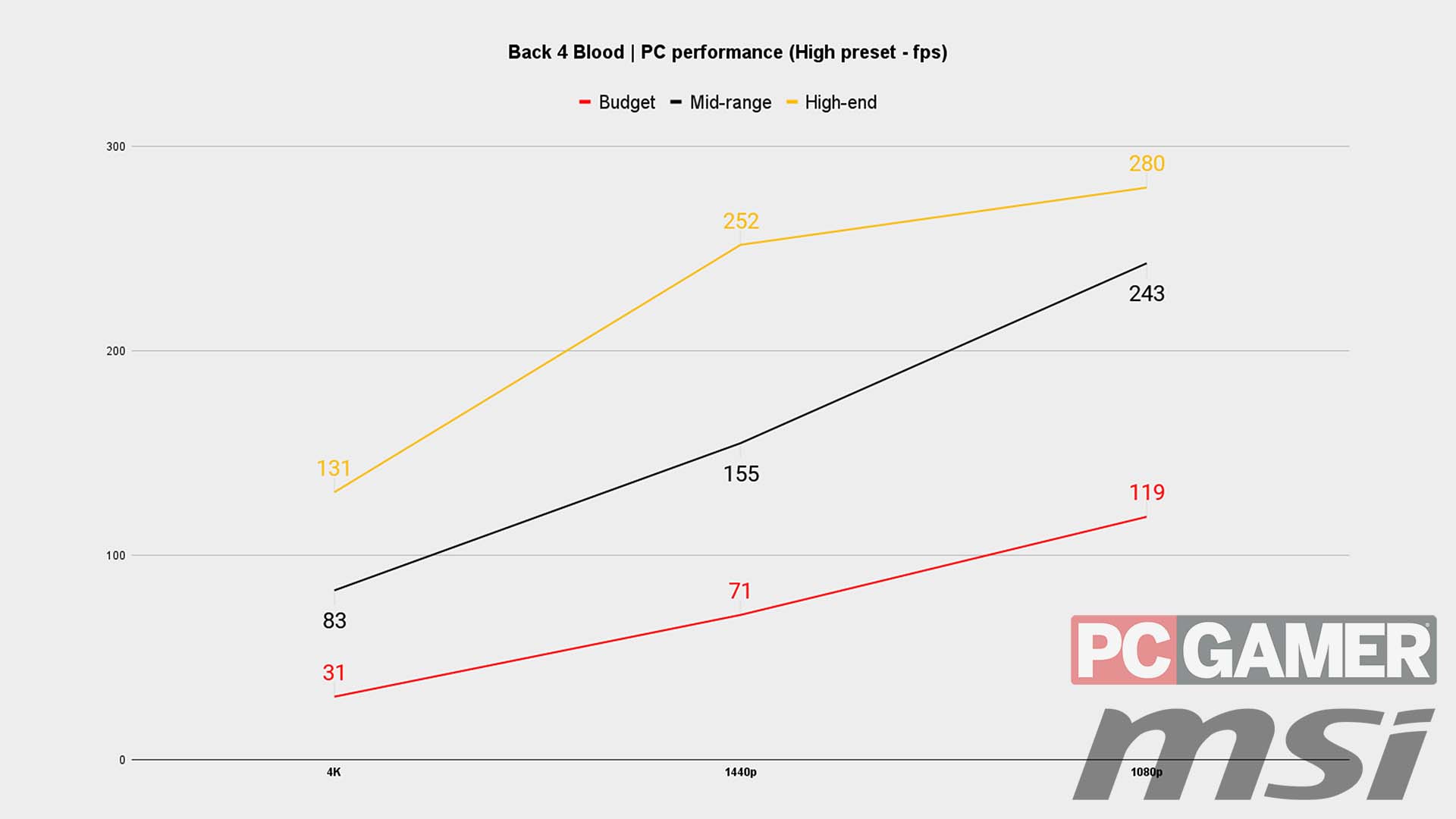
It's no more secret that Back 4 Blood runs majuscule on about any hardware. Eve on our budget machine, which usually baulks at high fidelity gambling, 60fps at 4K is possible with a little upscaling. Actually, it gets close without any upscaling at all, merely when FidelityFX Super Resolution and Nvidia Deep Learning Super Sampling are at your fingertips, why say no.
At a lower place you'll find the functioning results for our three testing machines, which you can read dormie on here.
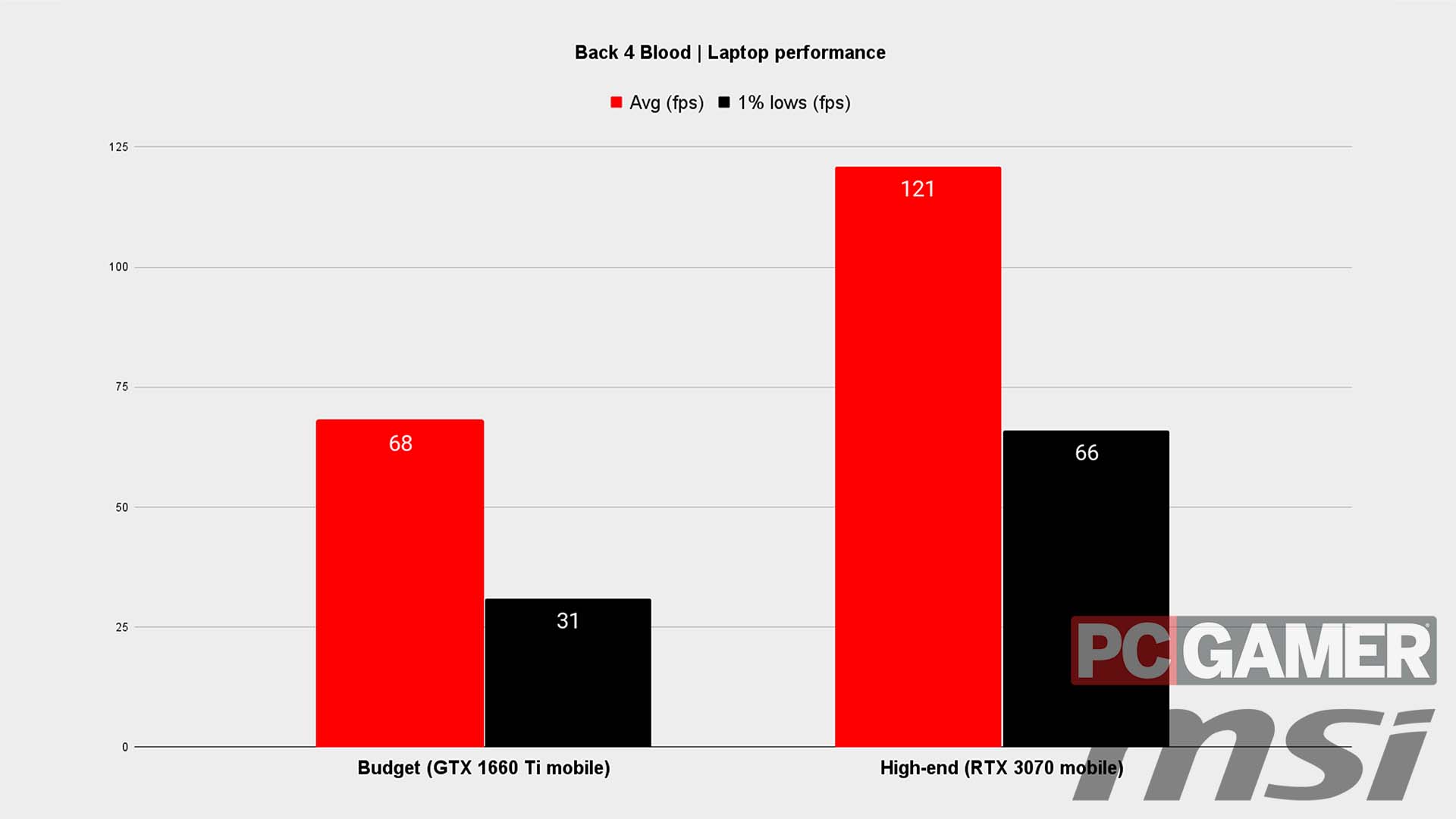
Even if you're active, Back 4 Blood shouldn't pose overly so much of a job. Our budget MSI laptop, with GeForce GTX 1660 Te, managed to hit over 60fps on the average, while the high up-end machine with a GeForce RTX 3070 low it.
Back 4 Blood best settings
- Squeaky preset: we recommend the Higher preset for the foremost blend of performance and quality on most hardware.
- Upscaling: AMD GPU owners should use FidelityFX Extremely Result Ultra Quality or Timber mode, while Nvidia fans should alternate connected DLSS Quality Mode.
- DX12: Stick to DirectX 12 if you can, it seems to be running well in In reply 4 Stoc.
- Turn out Chromatic Aberration: You're fortunate without it, trust Pine Tree State.
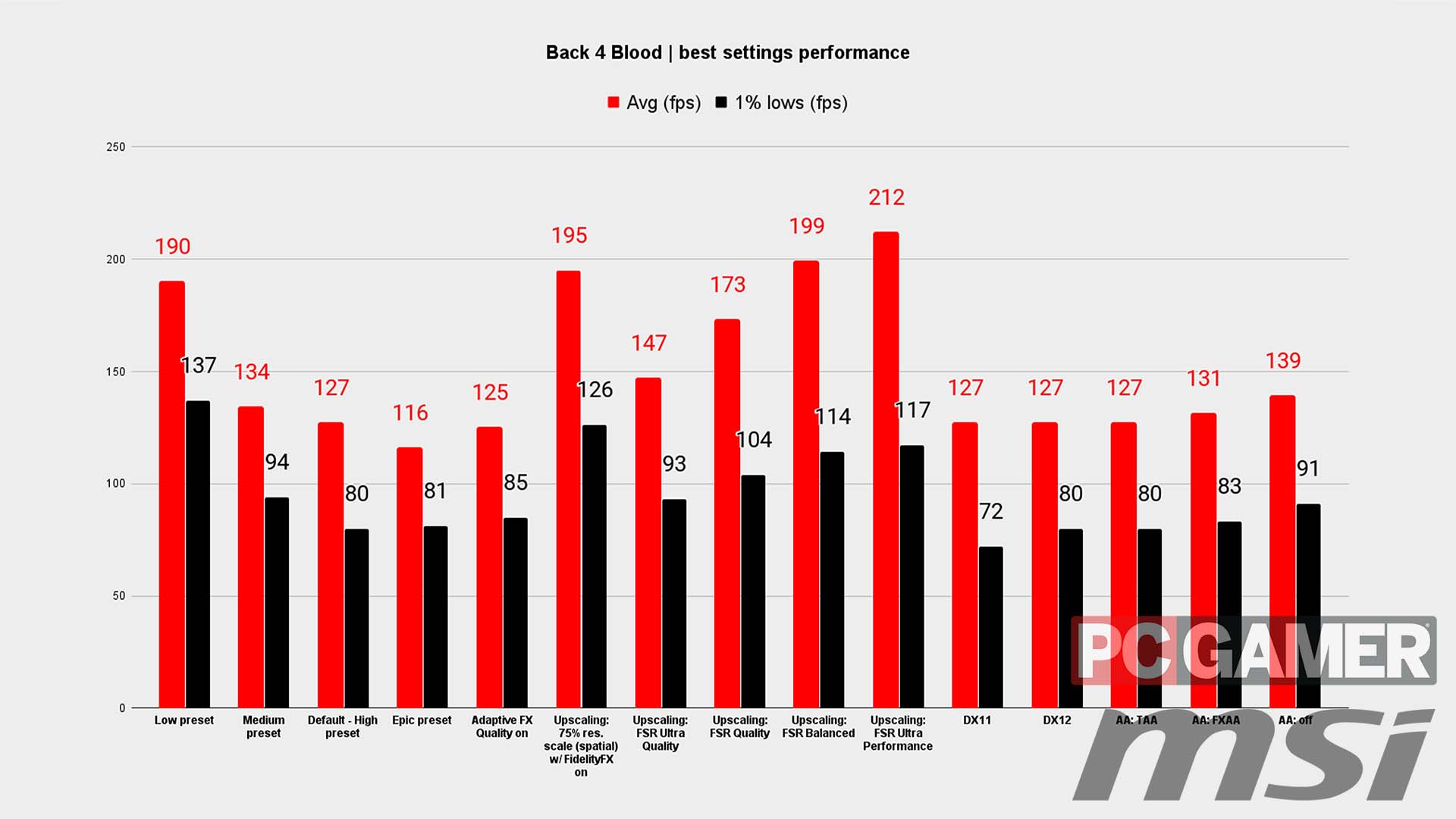
PC Gamer test rig: AMD Ryzen 7 5800X, AMD Radeon RX 6900 XT, 32GB RAM @ 2,666MHz, 1TB SSD, 850W PSU, MSI Divine X590 motherboard, AIO CPU liquid cooler.
Tested at 4K resolution.
Presets
A Good Book on our sponsor
As our partner for these detailed performance analyses, MSI provided the hardware we needed to test Gage 4 Blood on different Microcomputer gaming hardware.
First on this whistle-stop tour of Back 4 Blood's graphical options: presets. It's this setting that leave ultimately have the to the highest degree impingement on your game's graphics, and thusly it's cardinal to pick the rightfield one from the perplex-go up.
The presets will alter a few settings simply primarily will conform the following:
The Low preset will final you the best performance in-game, and it's largely more or less patches of foliage where you'll notice the dearth of item just about with this preset enabled. Reciprocally, though, you'll receive a huge bump to average frame rates—in our testing, the Low planned offers a 41% improvement over the Medium preset.
One and only scope that turns off and on with the Downhearted and Medium presets is Accommodative FX Quality. This sounds like it could make a significant difference to performance, as there are heaps of on-screen personal effects that could occur at some one time in Back 4 Blood (scan: it's chaos), but actually we didn't notice a large difference in performance when facultative this setting on operating room turned. So you might want to effort turning this on even if you're running on the Small or Medium preset.
The High preset is where I recommend you venture first, nonetheless. With about only a 5% conflict betwixt fair frame rates at High and Medium settings, unless you're barely scraping 60fps, the small operation hit is meriting information technology for the excess detail.
Anti-aliasing
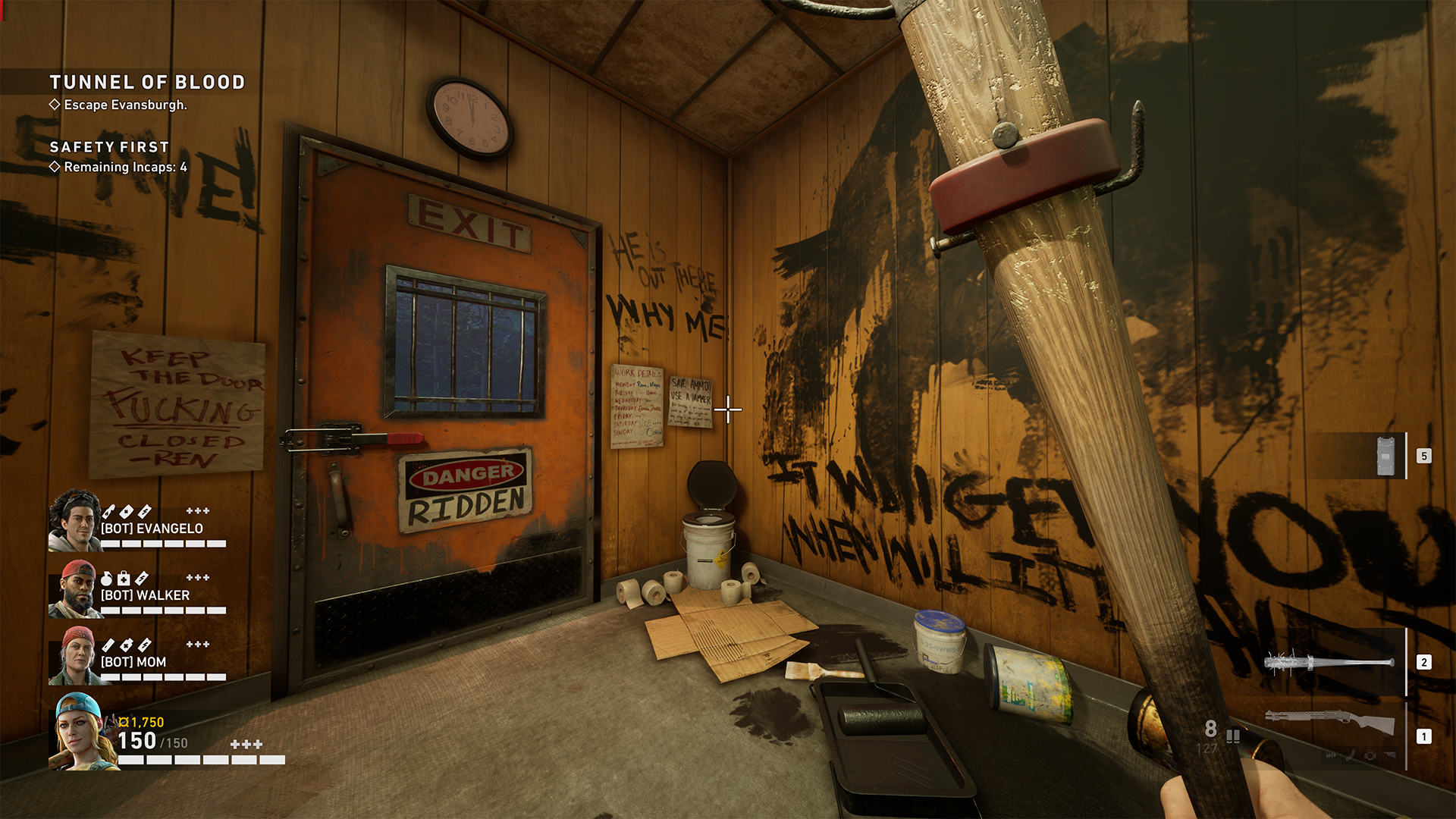
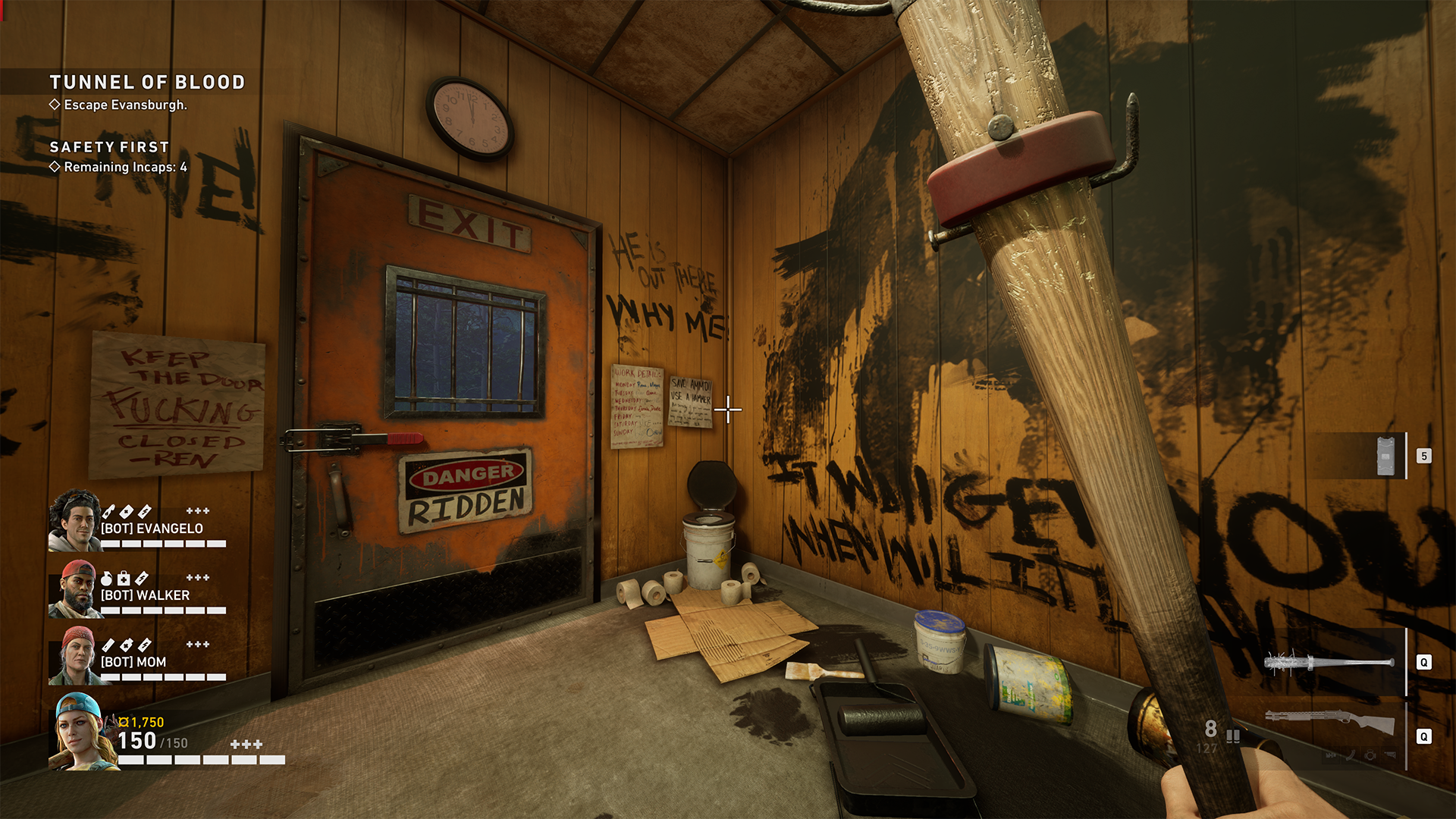
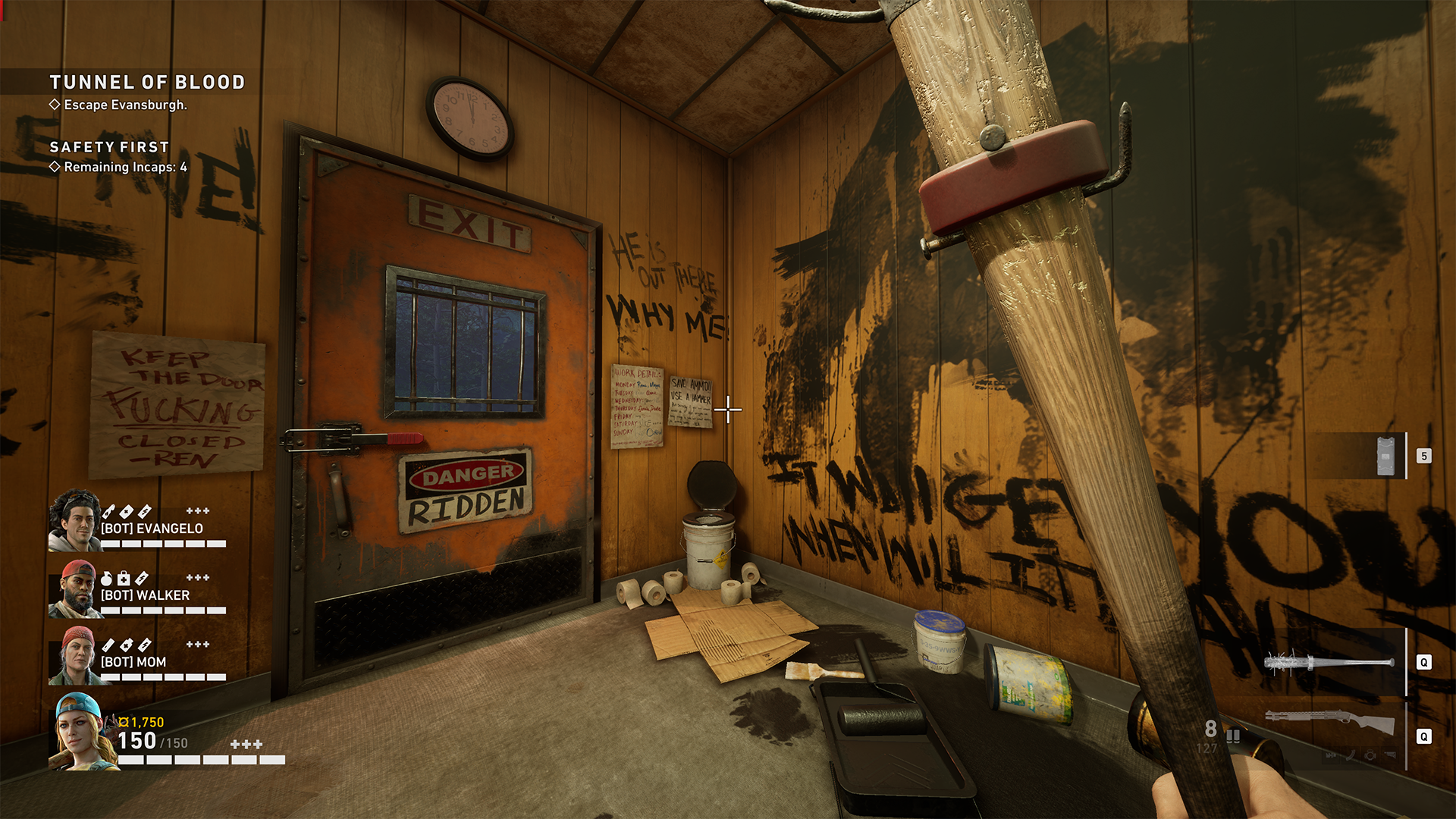
There are two anti-aliasing (AA) options to choose from in Hindermost 4 Blood: TAA and FXAA. You can also plainly good turn it hit, but the resulting rough edges are really non worth it for the low betterment in performance.
I commend projected to TAA present. It delivers the optimum picture quality and information technology's only marginally slower than FXAA. If you're struggling for performance, though, FXAA still manages to attack jaggies into oblivion with minimal fuss.
Upscaling
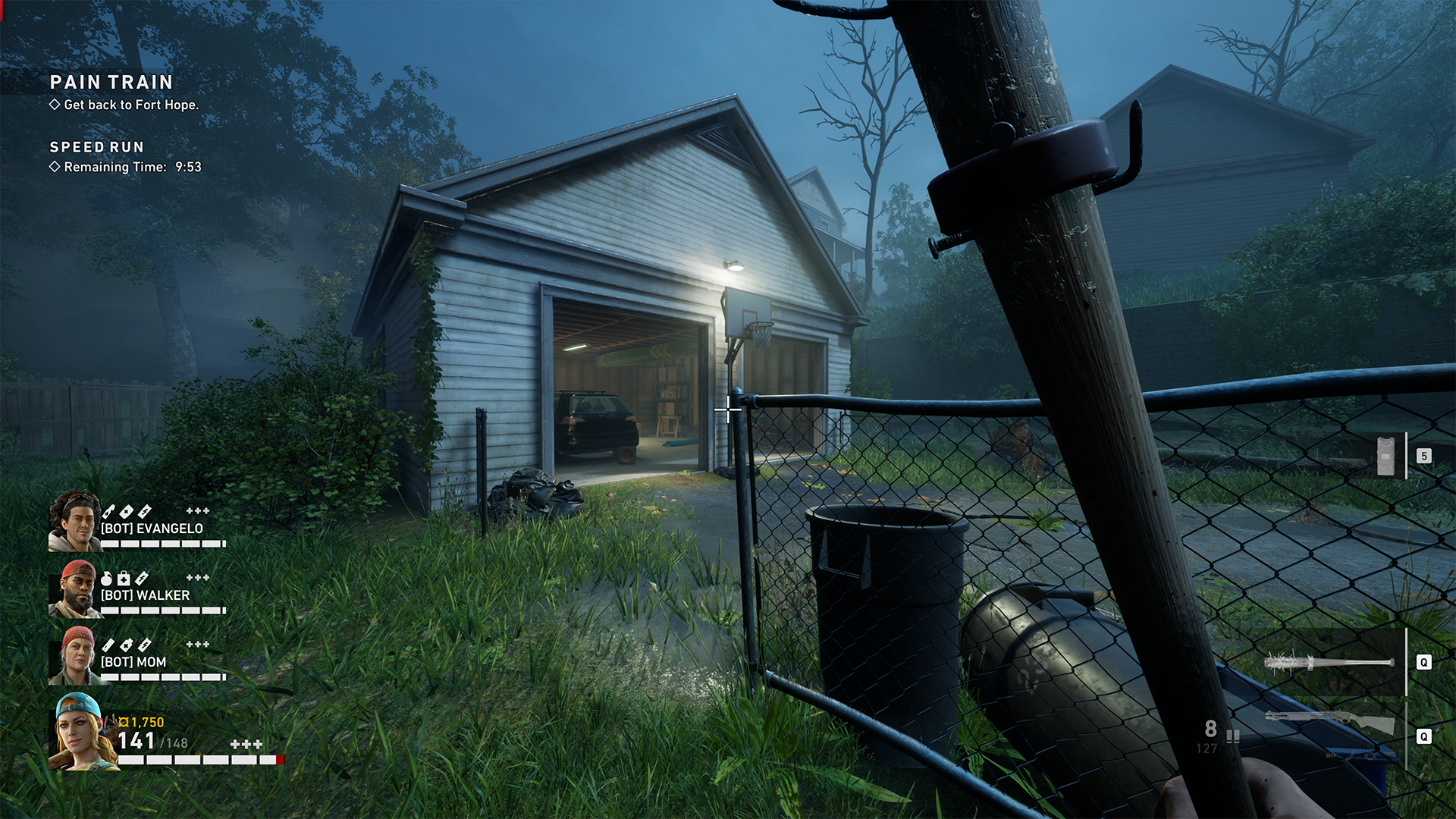
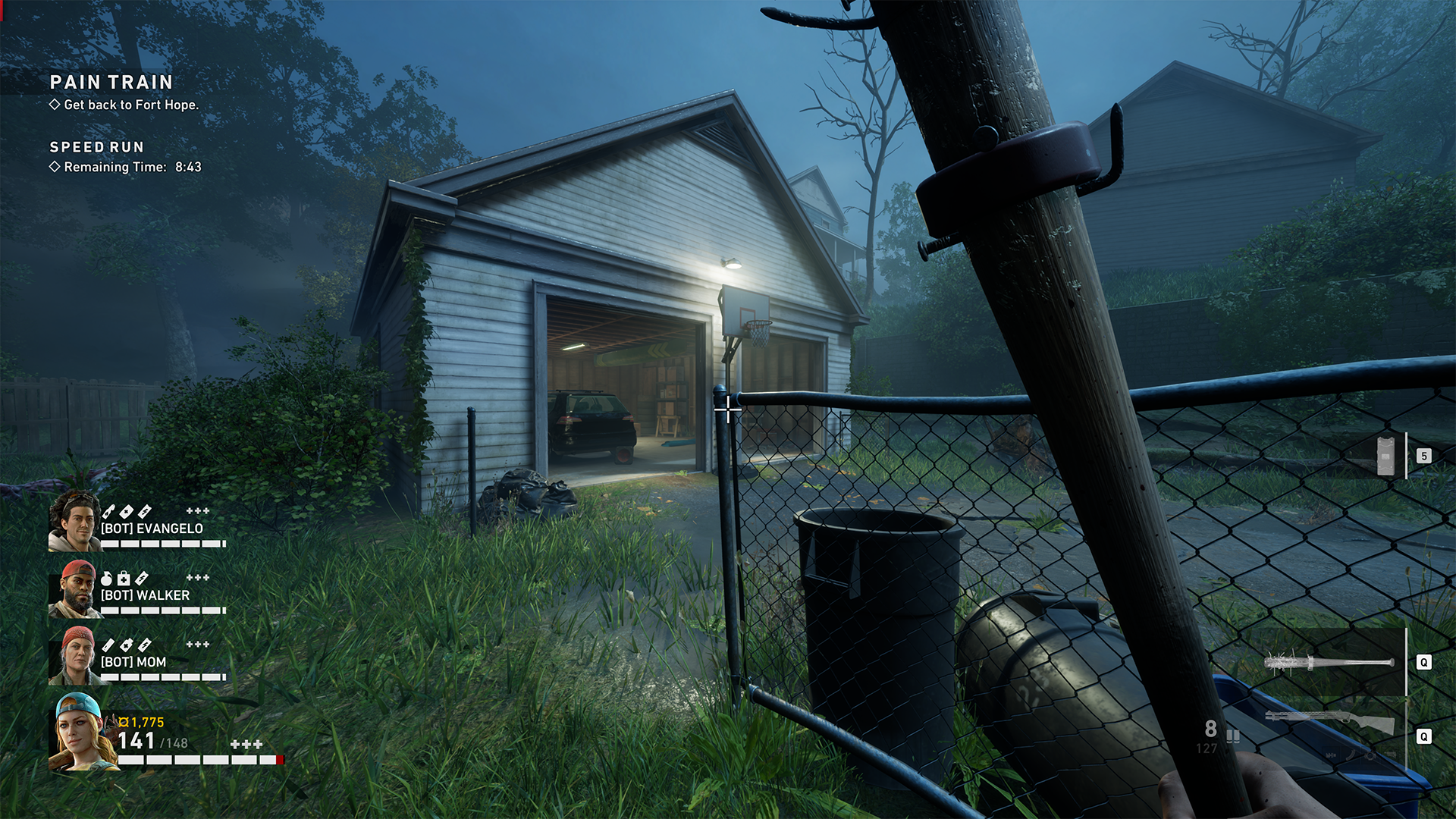
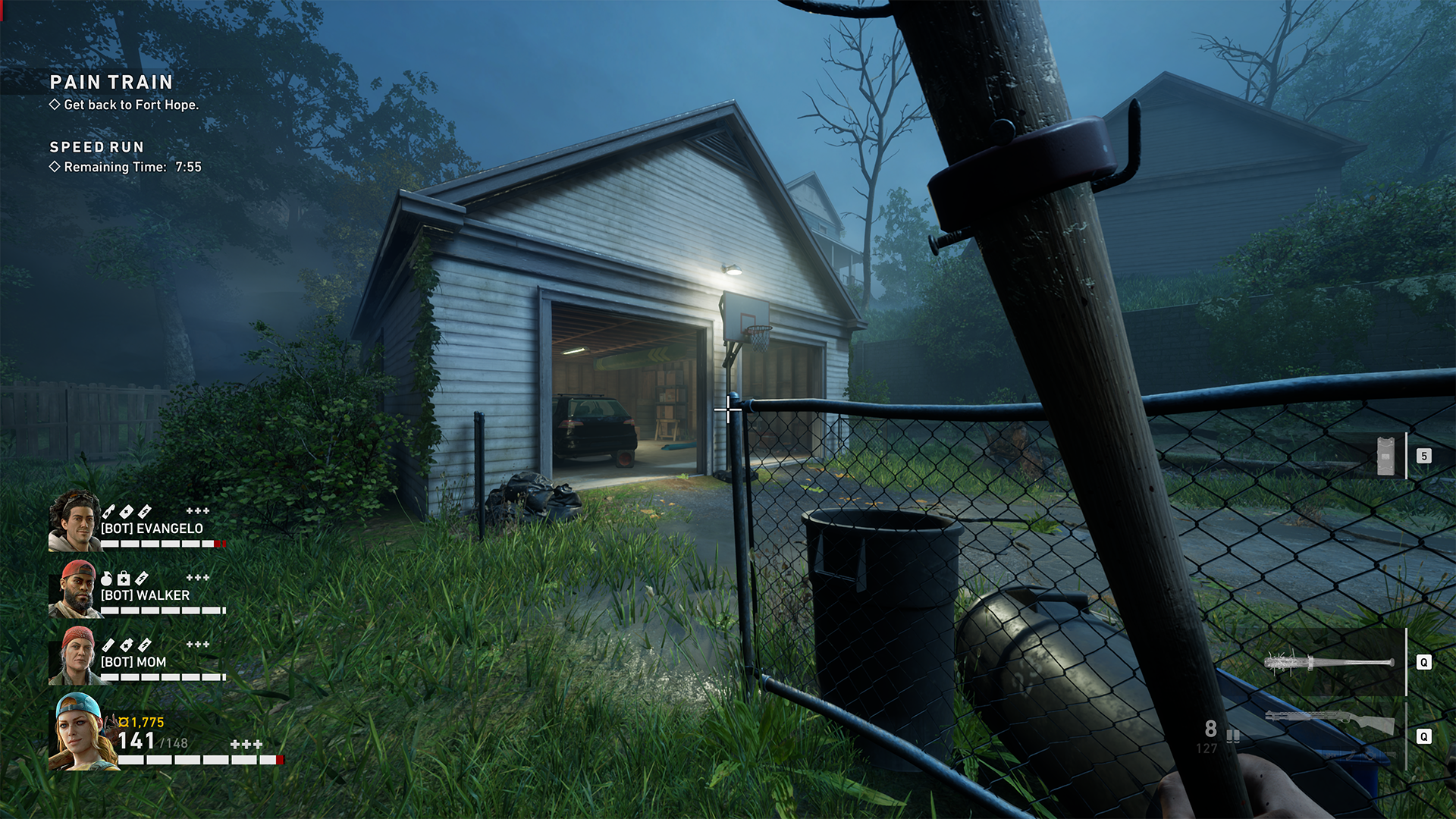
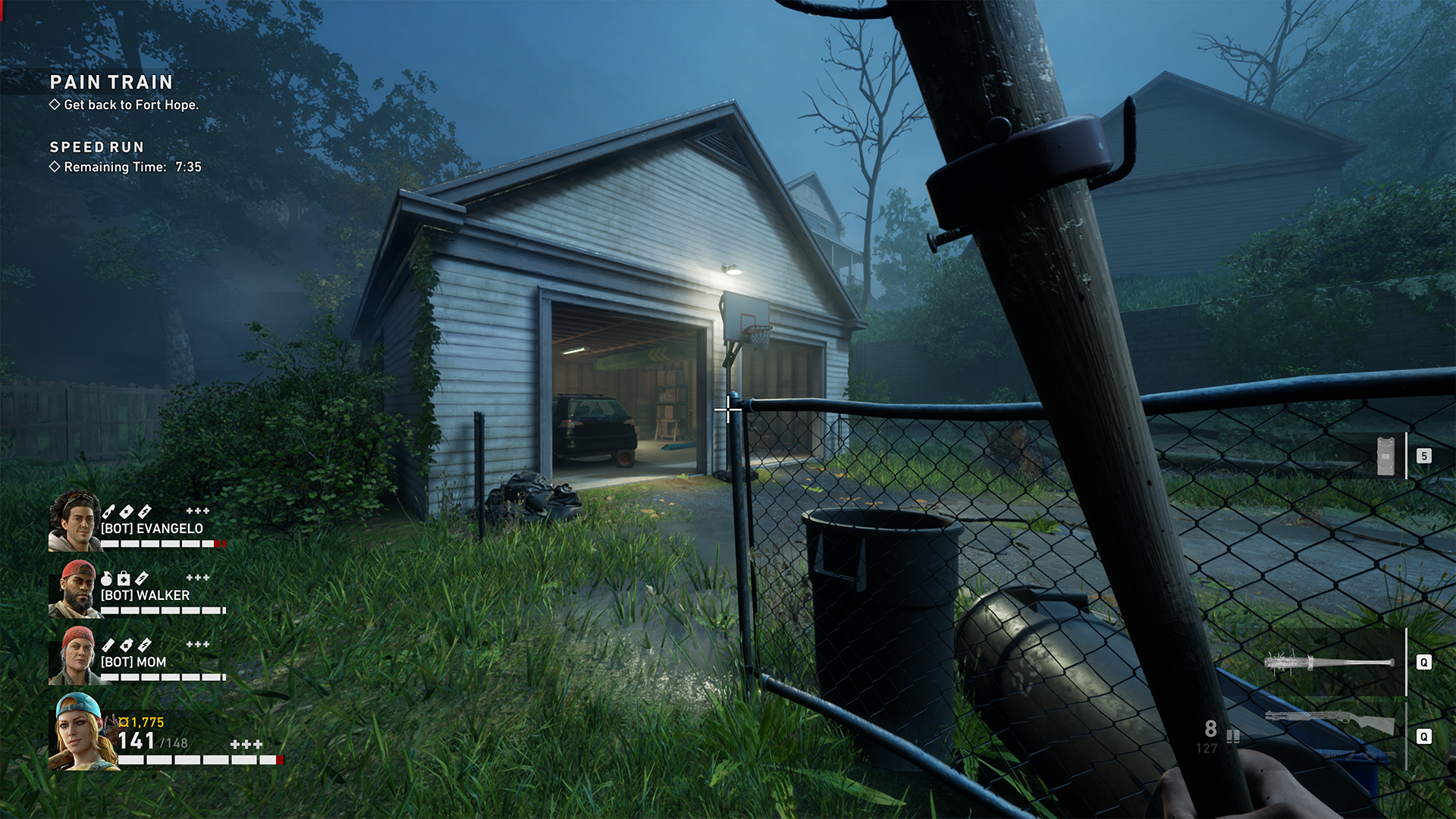
Upscaling is such an important feature nowadays, and through some recursive know-how, both Nvidia and AMD are delivering their own steel of upscaling magic in Back 4 Blood: Nvidia Deep Learning Super Sampling (DLSS) and AMD FidelityFX Super Resolution (FSR).
DLSS is not available for those using an AMD artwork card. However, you can rivulet FSR. That's actually true of gamers with Nvidia graphics cards, too. Conditional whether you've got an RTX 20-series nontextual matter card or newer, you mightiness also be able to run DLSS.
FidelityFX Super Resolution
If you're going the FSR route, you can expect an impressive gain in frame rates with FSR enabled in Immoderate Quality mode. In my testing, FSR Ultra Quality mode offered up roughly 15% higher frame rates than native translation with the High preset enabled. It's also the best looking option of the FSR whole lot, so try that one out first and see if you're happy with performance as is.
If non, FSR Prize mood will tug performance up that much more than: I sawing machine a 36% increase in performance over native performance with this FSR mode enabled, and it didn't looking overmuch worse off for it. You will miss some of the definition happening the edges of objects, but that can Be annealed through a few other settings tweaks.
Thus if you want to heighten upfield your game with FSR enabled, you can do so by facultative FidelityFX Sharpening and disabling Chromatic Aberration. Hey, you might even be better slay turn off Chromatic Aberration from the outset whether you're running FSR operating theatre not, but you didn't learn that from me.
Both Stable and Execution FSR modes will trade-polish off the pun's visuals for greater performance, which is wherefore I'm not too convinced they're the fashio to go Here. They could prove serviceable with the aforementioned sharpening tweaks, though, and May provide you to hit a higher frame rate without knocking the predetermined down a notch or two. Handy to have options, leastways.
Nvidia DLSS
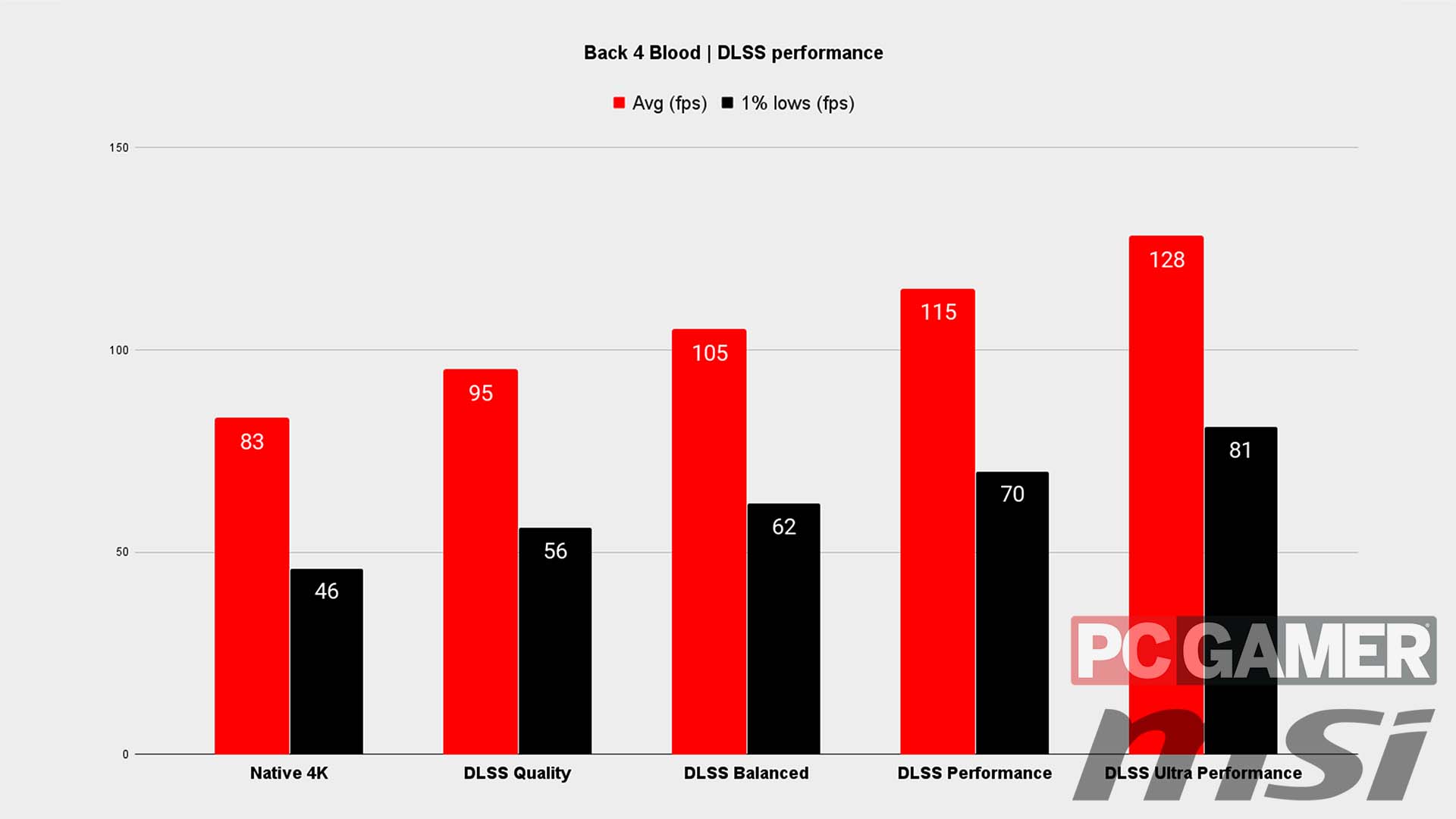
PC Gamer examine carriage: AMD Ryzen 5 5600X, Corsair H100x, MSI B550 Gaming Carbon WiFi, MSI RTX 3060 Ti Ventus 2x, Barbary pirate Vengeance RGB 16GB DDR4-3200, Samsung 980 1TB, Corsair RM850x, Corsair 4000D.
Tested at 4K resolution.
If you're gambling on an Nvidia graphics lineup, and one that's an RTX 20-series or newer, you can enable DLSS in-biz. It's mighty honorable, too, and in the Character modal value nearly indistinguishable from native rendering.
If you really neediness to crank the frame rates, you prat enable Performance Mode, which handed us another 54% performance over Native 4K. Impressive, to be sure, but you English hawthorn want to deliberate the Superior Mode for a more fidelity-focused experience.
Spacial upscaling (traditional)
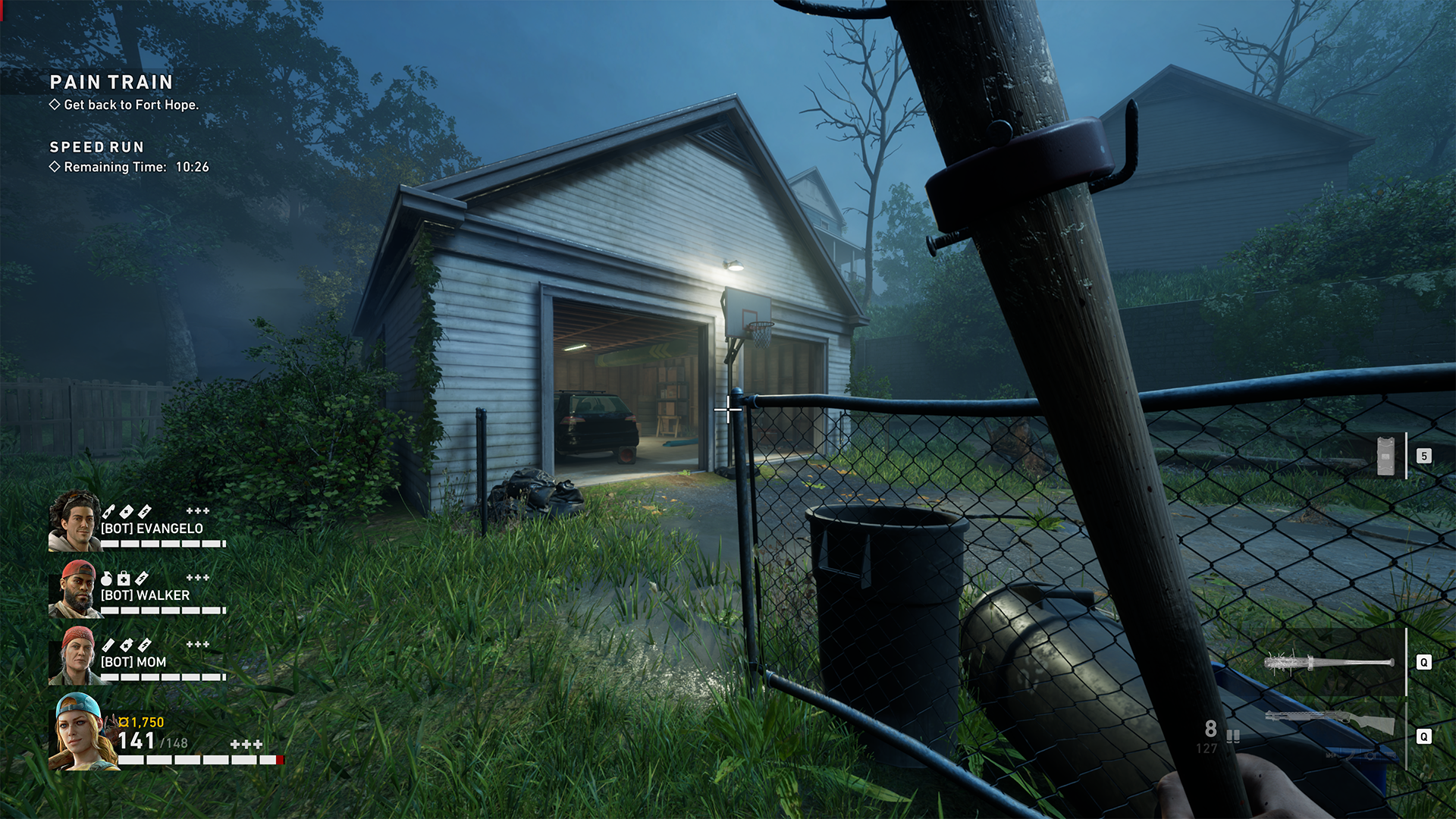
I don't really recommend you plunge into traditional upscaling when two superior options are available, but there's something to note here if you do. When running at a lower render resolution and victimization traditional upscaling methods to resize that image, FidelityFX Sharpening commode help remove some of the blurriness introduced during that process.
API
The only other setting I find worth mentioning is the quality of DirectX API version. You have a choice between DX11 or DX12 in Back 4 Blood.
By default, the game leave prefer DX12, and we'd recommend you peg to that unless you run into whatever issues with crashing Oregon stuttering. I've non come across any of those bugs to that degree, though, the game staying nice and sturdy for the duration of examination, and it seems DX12 offers slightly improved 1% low frame rates finished multiple runs in our bespoke benchmark course.
Accessibility
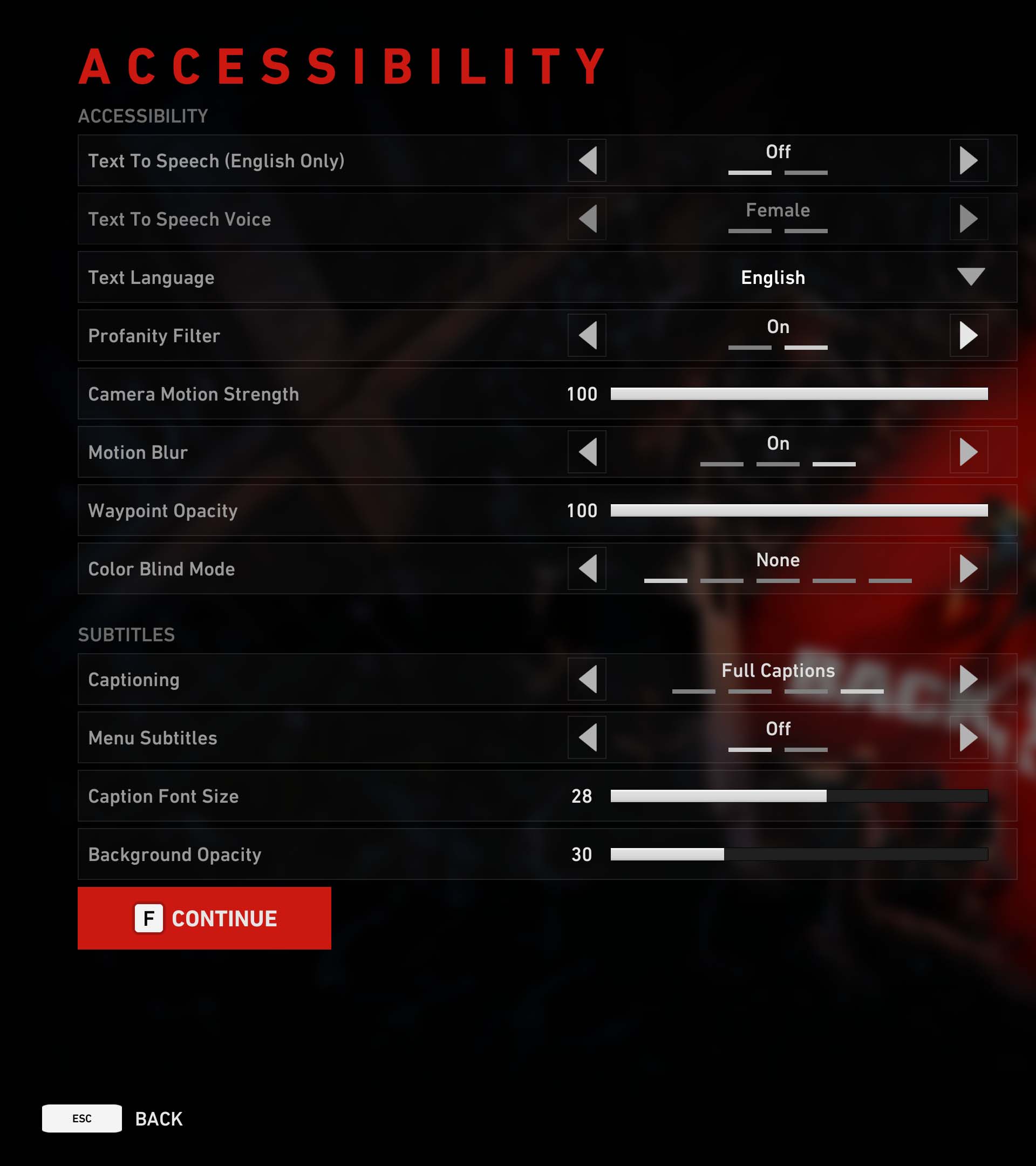
The accessibility settings are one of the first things to greet you when you boot dormie the stake, meaning it's easy enough to set everything to your liking before you receive into the action.
You'll find options for textual matter-to-speech at the very top, which is currently only available in English. Lower down you can enable different text languages, however, including: Spanish, Portuguese, French, Italian, Dutch, Polish, Turkish, Russian, Island, Korean, and Japanese.
Other useful accessibility features include: camera gesture strength, motion blear controls, and waypoint opaqueness.
There's also a neat feature for players who are colour blind. Non only can you prize from Protanopia, Deuteranopia, and Tritanopia in the settings, you tin choose custom and set your own colours for all manner of different coloured elements. Good stuff.
Style points
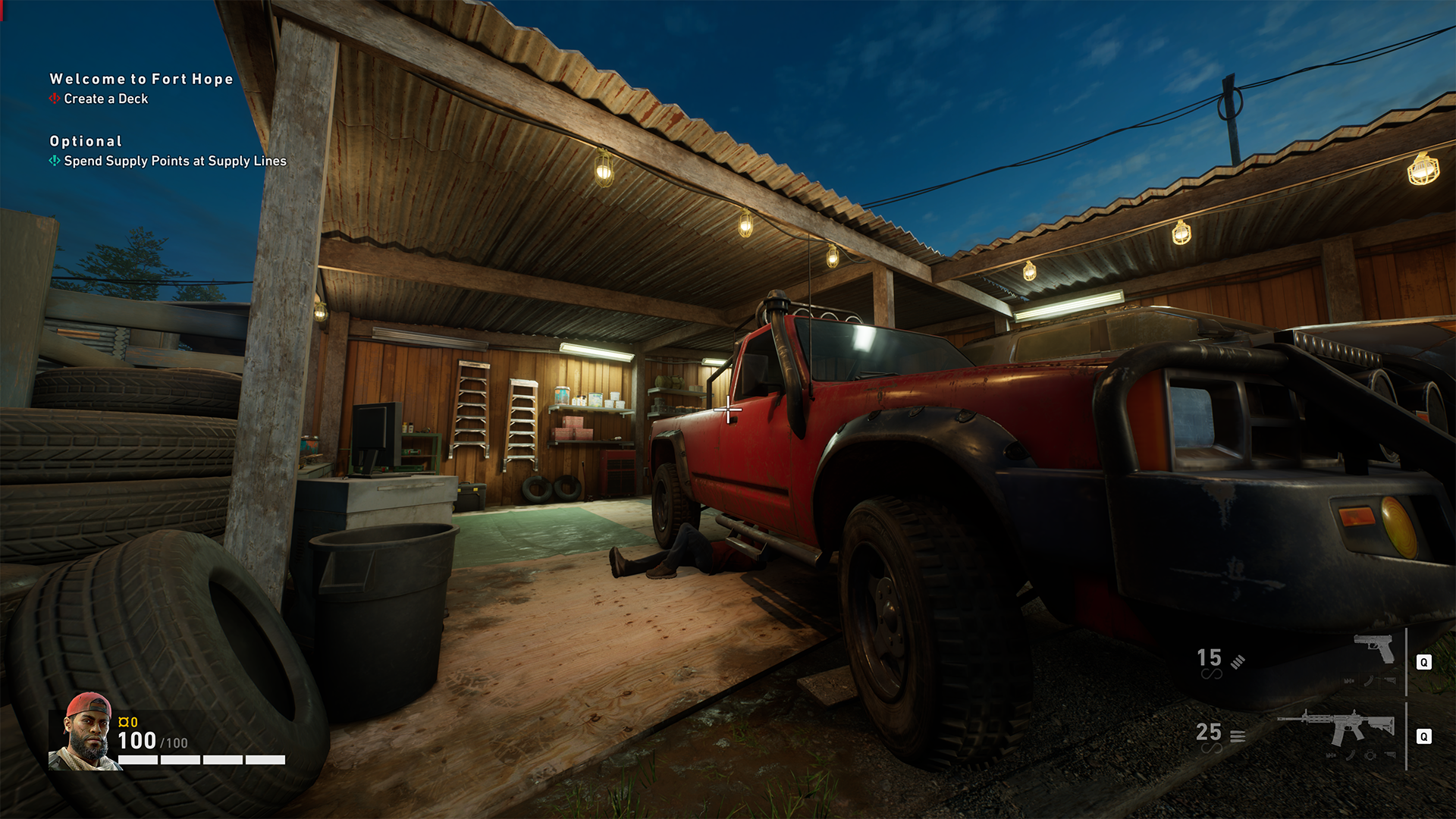
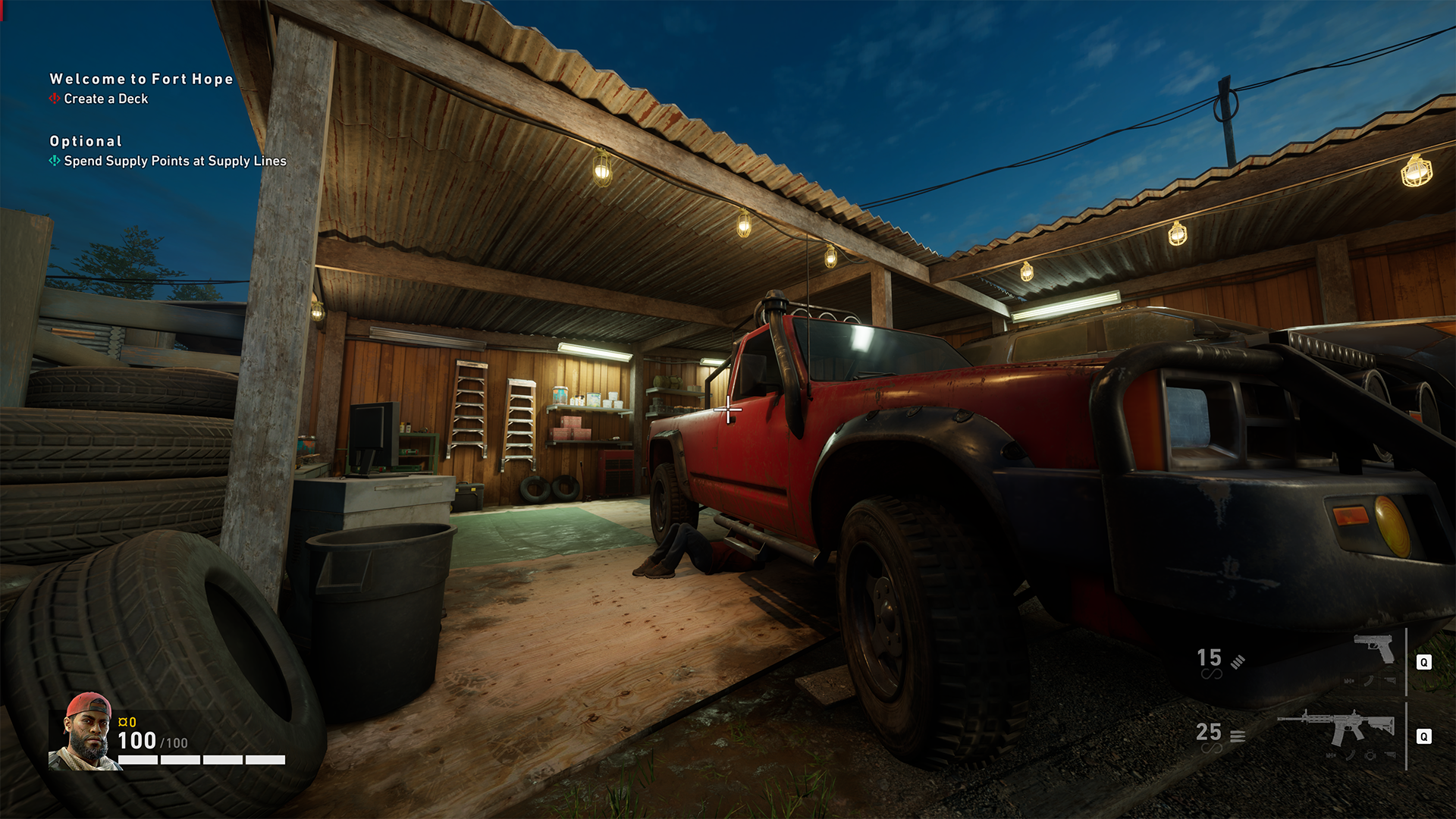
As I mentioned before, you power want to consider turn off Chromatic Aberrancy, for the sole argue that it's not my favourite looking for post-processing effect ever. It sort of makes everything look a little wavy and unclear, look-alike you're look through an old lens. That's kind of what IT's conscious to do.
It's personal preference, and I'm frightfully aware that some people absolutely love chromatic aberration subsequently I said to turn information technology off in Valheim. You can't always convert individual to change their mind, I judge, even when they're dead wrong.
All right, stand downbound Vividness heads. Onwards to another feature you could turn back along simply for the inebriate of it: FidelityFX Sharpening. This will result in a much sharper film, which some may prefer, although it could as wel cause a little also much definition on some edges, leading to a not-so-lovely distortion.
Again, in-person orientation. Have a look at the gallery above and resolve which you guess is best. That said, you may witness it better to look in-game.

Jacob earned his first byline writing for his own tech blog from his hometown in Wales in 2017. From there, he graduated to professionally breaking things at PCGamesN, where He would later gain dictation of the kit cupboard as hardware editor program. Now, Eastern Samoa senior hardware editor program at PC Gamer, he spends his days reporting happening the stylish developments in the applied science and play diligence. When he's non writing about GPUs and CPUs, you'll find him trying to get Eastern Samoa far away from the contemporary world as possible past wild tenting.

Source: https://www.pcgamer.com/back-4-blood-best-settings-performance-benchmarks/
Posted by: benderhiplace.blogspot.com
0 Response to "The best settings for Back 4 Blood | PC Gamer - benderhiplace"
Post a Comment